
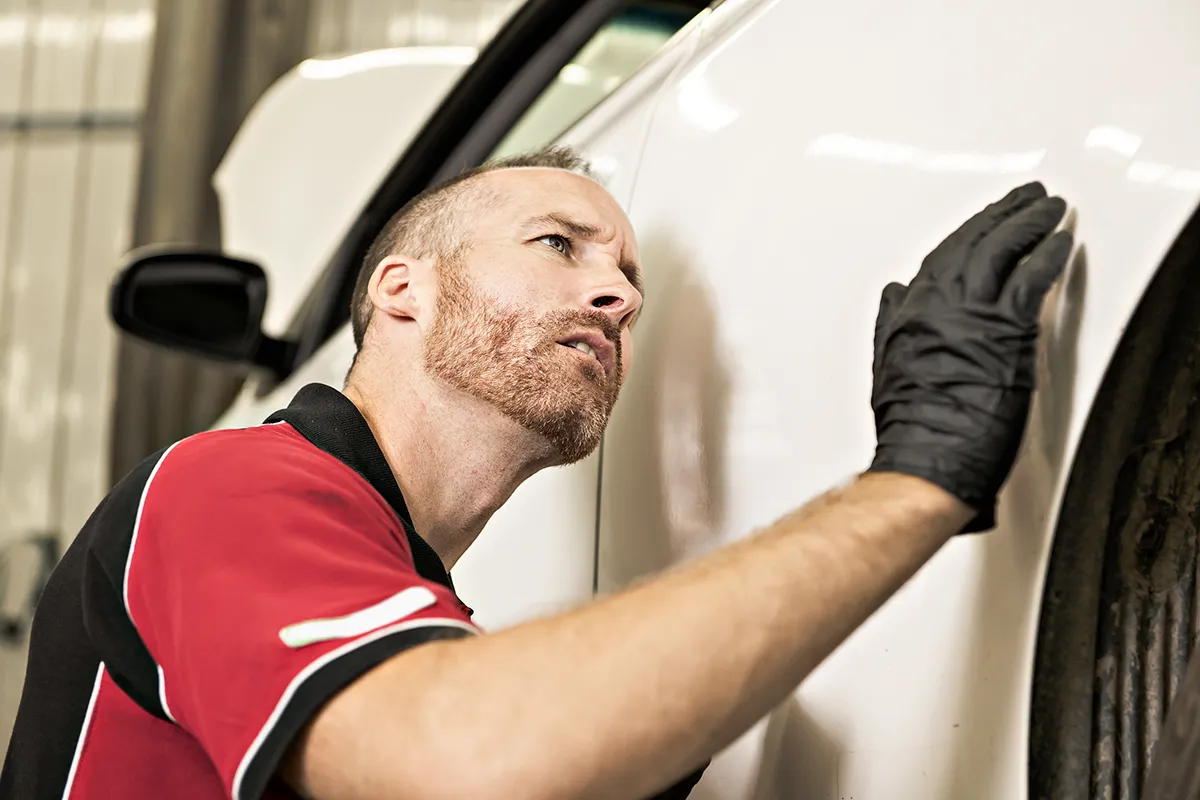
Most drivers have the same expectation after an accident. If the car looks good, drives straight, and no warning lights are on, the repair must be done. For many vehicles, that assumption holds true for a while. But in today’s world of complex vehicle engineering, a car can look fully repaired and still be far from properly restored.
This gap between “looks fixed” and “is truly repaired” is one of the biggest misunderstandings in modern collision repair. And it’s the reason some problems do not show up until months later, or worse, during another accident.
A proper repair is not just about appearance. It’s about restoring the vehicle’s structure, safety systems, and performance to how it was designed to function before the collision.
What Most People Think “Repaired” Means
When drivers hear the word repaired, they usually picture straight panels, matching paint, and doors that open and close smoothly. Those things matter, but they only tell part of the story.
Years ago, vehicles were simpler. Steel frames were thicker, electronics were limited, and tolerances were more forgiving. Today’s vehicles are built with lightweight materials, advanced safety systems, and extremely precise specifications. That means visual checks alone are no longer enough to determine whether a repair was done correctly.
A car can drive well in everyday conditions while still being out of alignment or missing critical structural accuracy.
Cosmetic Repair vs. Structural Restoration
Cosmetic repair focuses on what you can see. Panels are reshaped or replaced, body filler is applied where needed, and the vehicle is repainted to look like it did before the damage.
Structural restoration goes deeper. It involves restoring the underlying framework of the vehicle so it reacts properly in a future impact. This includes frame alignment, crumple zones, mounting points, and reinforcement structures that absorb and distribute crash energy.
When those areas are not restored correctly, the vehicle may not protect occupants the way it was designed to. Even small deviations can change how force travels through the structure during another collision.
The Hidden Areas That Often Get Overlooked
Some of the most important parts of a repair are also the least visible once the job is finished.
Behind exterior panels are reinforcements, brackets, weld points, and bonding areas that provide strength and stability. Suspension mounting points can shift slightly in an impact. Cooling components can be weakened without leaking. Fasteners and brackets may be reused when they should be replaced.
These issues rarely cause immediate symptoms. Instead, they show up over time through uneven tire wear, steering pull, noise, water leaks, or premature corrosion. By the time the problem becomes noticeable, the connection to the original repair is often overlooked.
Why Modern Vehicles Make Proper Restoration More Complex
Modern vehicles use a mix of high strength steel, aluminum, and composite materials. Each material behaves differently in a collision and requires specific repair methods. Some components can be repaired, while others must be replaced to maintain their strength.
Tolerances are also tighter than ever. Measurements are often accurate to the millimeter. A repair that is close enough visually may still be outside manufacturer specifications.
Improper repairs can also affect future repairs. Once a structure is weakened or incorrectly modified, it becomes harder to restore properly later on.
Safety Systems Don’t Care How Good the Paint Looks
Advanced driver assistance systems, often referred to as ADAS, rely on precise alignment to function correctly. Cameras, radar units, and sensors are mounted in specific positions that must be restored exactly after a collision.
Even minor misalignment can reduce the accuracy of systems like lane assistance, automatic braking, and adaptive cruise control. These systems do not always trigger warning lights when they are slightly out of position.
That means a vehicle can appear fully functional while safety systems quietly operate below their intended performance level. Proper calibration after repairs is essential to ensure these systems respond correctly when they are needed most.
Shortcuts That Turn Into Long Term Problems
Most repair shortcuts are taken to save time or reduce cost. Unfortunately, they often create problems that appear long after the vehicle leaves the shop.
Drivers may notice steering issues, vibration, or abnormal tire wear. Wind noise or water intrusion may develop as panels settle. Paint may fail prematurely if the surface was not properly prepared. Rust can begin in areas that were not sealed or treated correctly.
These issues are frustrating for vehicle owners and difficult to trace back to their original cause. In many cases, the damage could have been avoided with a more thorough repair process.
Why “It Drives Fine” Isn’t a Reliable Test
Modern vehicles are designed to compensate for minor inconsistencies. Suspension systems adapt. Steering systems adjust. Software masks physical imperfections to maintain a smooth driving experience.
That does not mean the vehicle is fully restored. Problems often surface during emergency maneuvers, heavy braking, poor weather, or another impact. This is when precise alignment and structural integrity matter most.
A repair that feels fine during daily driving may fail to perform properly when it matters the most.
What Proper Restoration Actually Involves
A true restoration begins with a complete inspection and teardown to assess all affected areas. Measurements are taken before and after repairs to ensure the structure matches manufacturer specifications.
Repairs follow documented procedures that specify materials, methods, and replacement requirements. Safety systems are inspected and calibrated as required. Paint and refinishing take place in controlled environments to ensure durability and consistency.
Quality checks and documentation confirm that the repair meets both safety and performance standards.
How Proper Restoration Protects Long Term Value
Vehicles that are properly restored are easier to evaluate during resale or trade in. Documentation helps verify the quality of repairs. Structural accuracy reduces the risk of future issues that could lower value.
Buyers may not always know how to describe what feels right about a well repaired vehicle, but they notice when things are off. A car that tracks straight, rides smoothly, and shows consistent wear tells its own story.
What Drivers Should Ask After Any Collision Repair
Even after minor damage, drivers should feel comfortable asking questions.
Was the vehicle measured before and after repairs?
Were safety systems checked and calibrated?
Were manufacturer repair procedures followed?
Is the work documented?
Is there a warranty on the repair?
A reputable shop should be able to answer these questions clearly and confidently.
Restoring Confidence, Not Just Appearance
A proper collision repair does more than make a vehicle look good again. It restores safety, performance, and confidence.
In a world of increasingly complex vehicles, true restoration requires precision, experience, and attention to detail. When a repair is done right, drivers may never notice the difference. And that is exactly the point.
KEY TAKEAWAYS
- A car can look repaired without being properly restored. Straight panels and matching paint don’t guarantee that the vehicle’s structure, safety systems, or alignment were corrected accurately.
- Cosmetic repairs and true restoration are not the same. Proper collision repair goes beyond appearance to address structural integrity, mounting points, and how the vehicle will perform in future impacts.
- Modern safety systems depend on precise repairs. Cameras, sensors, and radar require exact positioning and calibration—small misalignments may not trigger warning lights but can reduce effectiveness.
- Shortcuts often lead to delayed problems. Issues like uneven tire wear, steering pull, water leaks, and premature rust may surface months after a repair that wasn’t done thoroughly.
- Proper restoration protects safety, reliability, and value. Repairs performed to manufacturer specifications help preserve vehicle performance, long-term ownership confidence, and resale potential.